by David Bell | Apr 4, 2018
Filing an insurance claim is inevitable. The ability to do so is why people purchased the insurance policy from you in the first place.
The question is, do your customers know how to file a claim? When the time comes are they going to scramble to uncover what to do? Or can you make it easier by providing step-by-step tips that educate them on the process in advance?
The section between the lines provides a quick and easy guide you can post on your website or in your email communications with your employer clients.
=================================================================================
Employer Tips for Managing Workers’ Comp Claims
As a business owner, you hope you never have to rely on your workers’ comp insurance policy. But similar to a fire drill, it is important to understand what you’ll need to do when the time comes to file a workers’ comp claim.
Knowing your employer responsibilities in advance can save you time while helping to reduce liability, potential lawsuits, and potential employee repercussions.
Take time to these fundamental steps now. When the time comes to file a claim, you can easily navigate the process. You’ll also keep your business financially stable while ensuring your employee can easily recover.
Report Claims Immediately. Thoroughly fill out a “First Report of Injury” form. Failing to report your claim promptly and accurately could result in fines and penalties. Studies have shown that the longer a company waits to report an injury, the higher the damage costs. You can keep costs down by acting as soon as you learn an employee is in need of workers’ compensation benefits.
Document the Details. Create a paper trail that documents the details about the employee’s situation. Capture the who, what, when, where, why and how information. Interview the employee and any witnesses as soon as possible. It is important to capture details while it is fresh on the minds of those involved. Get signed statements. Take photos, as appropriate.
Contact Your Claims Representative. Be prepared to share the details and documentation surrounding your employee’s injury or illness. Have your employee’s contact info, wage history and claim history on hand. After you’ve provided the details, your claims representative will submit the required paperwork you shared.
Share Your Return to Work Plan. To prevent claims from escalating, share your company’s return to work plan with the employee and your claims representative. If possible, be prepared to facilitate modified work restrictions. If your employee’s responsibilities cannot accommodate modified duty, make sure all parties involved know this up front. Sharing this details from the beginning creates a clear game plan while setting expectations regarding productivity impact and overall team morale.
Keep in Touch. Out of sight, does not equal out of mind. It is critical that you consistently communicate with your employee about their status and progress. Studies have found that injured workers who feel their informational needs met also return to work faster. Let your employee know you are concerned about their recovery.
By making yourself familiar with these five steps, you can easily navigate the workers’ comp process when the time comes.
=================================================================================
Remember, while selling insurance policies keeps your independent insurance business going, it is only one facet of your job. To ensure repeat customers, you need to find ways to strengthen your employer client relationships. The more you can share helpful insights like this with your existing client base — the easier it is for customers to stick with you.
by David Bell | Mar 28, 2018
Talking to your employer clients about workers’ comp insurance can seem pretty cut and dry. It is a fact that all small business owners need workers’ comp. Yet, there is so much more to it than your small business owner clients probably know.
Consumers and agents alike realize the basics about workers’ comp are pretty easy to understand. The bottom line is that every employer is responsible for providing a safe work environment, and liable for any occupational injuries.
Workers’ Comp Insurance policies can offer coverage for medical expenses, replacement wages, disability benefits, and even death benefits.
But as an independent insurance agent, you know there is much more information your employer clients need to know.
When you take the time share insights beyond basic understanding, you are providing a valuable service while connecting with your customers. Educating employer clients helps you stand out and gives you a leg up on your competition.
To help you quickly showcase your expertise, we’ve collected a list of Workers’ Comp Facts you can share with prospects. You can read the tips here. But you can also download this sheet to print or email it to your clients. You can even place it on your website.
Share these workers’ comp educational tips with prospective clients whenever you’re going to discuss their workers’ comp needs. Let clients know that your knowledge and expertise is part of the additional value they get when they use your independent insurance agency.
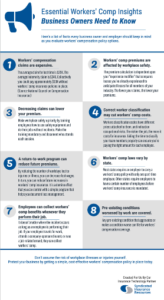
Essential Workers’ Comp Insights Business Owners Need to Know
Here’s a list of facts every business owner and employer should keep in mind as you evaluate workers’ compensation policy options.
Workers’ compensation claims are expensive. The average claim for lost time is $29K. The average indemnity claim is $24K. Collectively you could pay approximately $53K without workers’ comp insurance policies in place. (Source: National Council on Compensation Insurance.)
Workers’ Comp premiums are affected by workplace safety. The premium calculation is dependent upon your “experience modifier” that compares losses you’ve already experienced to anticipated losses for all members of your industry. The fewer your claims, the lower your premiums.
Decreasing claims can lower your premium. Make workplace safety a priority by training employees how to use safety equipment and do their jobs without incidents. Make the training mandatory and document who attends each session.
Correct worker classification may cut workers’ comp costs. Workers classification codes have different prices attached to them, and indication occupational risks. The riskier the job, the more it costs for insurance. Taking the time to classify your team members properly can ensure you’re paying the right amount for each employee.
A return-to-work program can reduce future premiums. By reducing the number of workdays lost to injuries or illness, you can decrease lost wages. In turn, you can reduce future increases in workers’ comp insurance. It is a domino effect that you can control with a simple program that helps you document loss management.
Workers’ comp laws vary by state. Most states require an employer to carry a workers’ comp policy with only one part-time employee. Other states require employers to have a certain number of employees before workers’ comp insurance is mandated.
Employees can collect workers’ comp benefits whenever they perform their job. It doesn’t matter where the incident occurs as long as an employee is performing their job. If your employee travels for work, attends a company-sponsored event, or runs a job-related errand, they can collect workers’ comp.
Pre-existing conditions worsened by work are covered. Any pre-existing condition that aggravates or makes a condition worse can file for workers’ compensation coverage.
Don’t assume the risk of workplace illnesses or injuries yourself. Protect your business by getting a simple, cost-effective workers’ compensation policy in place today.
Add it to your arsenal of value-added information you provide your employer clients.
Download Now
by David Bell | Mar 1, 2018
You make money when you can promptly provide competitive quotes selling workers’ comp to individuals or businesses. Since most work injury claims cost an average of $37,000, selling these policies should provide you with a constant revenue stream.
Think about it. Every business with employees needs workers’ comp protection, especially if they have occupational hazards or illnesses associated with their industry. Many states also make it mandatory, and some vendors are required to provide proof of coverage to bid on jobs.
So, selling workers’ comp sounds like a no-brainer for any insurance broker or agent to easily accomplish. Or is it?
Competition is fierce. You’re not the only insurance broker or agent selling workers’ comp that is looking to gain new clients and close deals.
Let’s face it, today’s world is a first-come, first-served marketplace. You may do all the work and lose the deal because you didn’t respond fast enough. How can you compete and win?
Here are six steps to successfully sell workers’ comp in any state.
1) Know workers’ comp requirements.
Before you start selling, get licensed for every state you’ll be selling workers’ comp in, and ensure you’re compliant with the mandated guidelines for each state. Stay on top of the mandates, as regulations can shift over time.
2) Educate yourself.
Understand class codes, laws and underwriting so you can anticipate answers to questions before they are asked. You should also learn key workplace injury statistics and claim facts – from productivity losses to recovery time to claim costs. Weave these points into your client conversations about their workers’ comp needs.
3) Sell your expertise.
Your knowledge is a commodity that can set you apart from competitors. It also positions you to give clients advice on rule, laws, and ways to save money. Go into client conversations armed with thought-provoking questions to ask your customer about their workplace potential risks. Help them focus on the reasons they need a workers’ comp policy.
4) Create a marketing plan.
Cold calling is hard. Create a marketing plan designed to help you target to the types of clients you want to reach. Marketing is a full-time job. Consider hiring a marketing consultant to set you up for success. (Ask our marketing consultant, Joy, to point you in the right direction.)
5) Develop a workflow.
Follow a three-step process that you walk through with every prospective client that Educates, Shops, Advises. Start by educating and informing business owners about workers’ comp rules. Let them know you’ll do the shopping so they can compare prices and quotes. Advise and help them with workers’ comp claims and coverages after the sale.
6) Work smartly.
Stop chasing rates and policy options as it can quickly eat up your time and diminish your productivity. Use smart tools that increase your market access and quickly gets you quotes, even for your hard-to-place clients. Don’t just sign up for these tools; actively use them. If you don’t know how to use them, ask the provider to guide you through the process.
These six steps seem easy enough to follow. But the devil is in the details, especially when it comes to quickly getting workers’ comp quotes. Remember, you’re competing with other insurance brokers or agents who may submit quote options to your prospective clients first.
Since quick response is the key to your success, you need to tap into smart options that help you quickly deliver.
Stop wasting your time navigating multiple carrier systems, dialing for quotes, and waiting for returned phone calls. Access exponential options and get quick quotes today using your free Syndicated Insurance Resources Dashboard. Save time and money by using our one-to-many approach. Upload one ACORD and receive instant indications.
Already have an account? Log in now. Need one? Sign up here. Either way, get started quickly finding quotes today. (Note: First-time users need to set up their Appulate Link.) Want someone to walk you through the process? Call or email us at 877.333.8195.
Stop leaving money on the table. Let Syndicated help you work smarter today!
by David Bell | Feb 8, 2018
Workers’ compensation insurance is something companies need. You know this because you’ve been successfully selling these types of policies for years. But you how do you win more business and keep existing clients coming back for more? Are you effectively communicating the value you provide employer clients?
Since most insurance producers sell on price, you need to find opportunities to showcase the ways you’re different. Help your clients and prospects focus on the many ways you help them. In every touchpoint and interaction, shine the spotlight on the hands-on approaches you use to meet their needs.
Before you can effectively share your value, pause a moment to reflect on what you’re not. When you sell workers’ comp insurance, you are more than an order taker. Managing paperwork and getting signatures on documents is only one step in a multi-faceted process. Finding insurance quotes is a result of the many things you do.
Your job is complex. It requires deep knowledge and expertise. You are good at what you do because you’ve spent hours learning the nuances of a very complicated subject — workers’ compensation. Your extensive training provides you with license(s) to prove you’re prepared to solicit and sell workers’ comp insurance.
How can you focus on the value you bring to clients? Make a list of the ways your services make a difference.
Whether you’re just starting out or you’ve been in business for a long time, you probably know ways to stand out from your competitors. But do you actively share your value with everyone you know? No matter where you are in your journey, make sure you reflect on the ways to bring value to your clients.
10 Ways You Bring Value
When you work with clients, do you provide one, all, or some of these value-added services?
- Advisor. Provide insights to help determine the protection your client’s business needs.
- Conduit. Funnel information between all parties and mediate interactions between employers and insurance carriers.
- Translator. Put things in plain English to help employers and employees successfully navigate a labyrinth of information that is typically difficult to understand.
- Guide. Help employers make better, informed workers’ compensation programming decisions.
- Fixer. Identify areas clients could possibly change to positively impact their workers’ comp loss run reports.
- Evaluator. Look at a company’s risk to locate the right types of policies at the best possible rates.
- Shopper. Leverage the right tools and resources to quickly find the policy options that fit your employer client’s needs.
- Analyzer. Review data about employee injuries before the “magic moment” and make sure cases are not open that should be closed. This analysis can quickly assess ways that may help lower experience mods.
- “Boy Scout.” Help your client’s prepare for workers’ comp audits in advance by reviewing payroll records and checking job classifications for possible mistakes.
- Creator. Develop a process for employers to follow when accidents occur. This can help ensure claims are filed appropriately while employees receive help and can return to work quickly.
This list is not comprehensive, as there are things you do that others do not. Take a moment to reflect on the ways you help your clients. Use this as your foundational list, and add additional ways you provide value over time.
Download this one-page PDF we created just for you: “10 Ways We Bring You Value.”
Create Constant Reminders
Now that you have your list, you need to find ways to remind everyone about your value continually.
Dale Carnegie said it best: “Tell the audience what you’re going to say, say it; then tell them what you’ve said.”
In this case, your audience includes your clients, prospects, and even yourself.
Place your values in strategic places that are highly visible. Leave them in plain sight for everyone to see. Here are a few easy ways to remind people about your value:
- Create a framed sign for your office.
- Post the information on your website.
- Print a flyer that you include in your welcome folder.
- Highlight one value every month in your email signature.
- Include it in your newsletter.
- Make a Facebook ad touting your key differentiators.
The opportunities to promote your value are endless. So toot your own horn and remind people about the benefits of doing business with you.
Grab your copy of “10 Ways We Bring You Value.” We created it so you can share your value with your clients immediately.
by David Bell | Jan 22, 2018
There is an excellent opportunity for insurance brokers to sell workers’ comp since any business with employees needs this type of insurance to conduct business. This also means employers are seeking the best rates they can find. In turn, this increases the pressure to become competitive.
How can you set yourself apart from other insurance brokers selling workers’ comp? Let prospective clients know they can trust you. Demonstrate you have their best interests at heart while showcasing your ability to partner with them. There are many ways you can stand out from the crowd, including promoting your knowledge, offering answers to critical questions, and leveraging technology to find hard-to-place quotes quickly.
Promote Your Knowledge
Elevate your understanding of workers’ comp while building trust by mapping out a process to address client needs. Make it a two-pronged approach that highlights your credentials and walks them through standard questions they need answered.
Weave your know-how into conversations. Highlight it on your website, and create a one-page flyer about you and your company. In each approach you’ll want to:
- Establish trust by offering customers an overview of what they get when they do business with you.
- Share how your expertise and knowledge of state rules and regulations may help them get lower rates.
- Highlight your credentials and the regular trainings you participate in keep you up-to-date.
- Walk them through the process you use to access markets for the best solutions to meet their needs.
Offer Answers to Key Questions
Most employees are not sure what questions to ask when shopping for insurance. In turn, they can end up with inadequate coverage because they unknowingly enlist the support of an agent who doesn’t specialize in workers’ comp.
Create a list of top questions your customers need answered when looking to buy workers’ comp insurance. You can help your customers become knowledgeable by sharing a checklist of questions you want to help them answer. Consider posing these questions to demonstrate your know-how and provide answers to questions about quotes, rates and employees:
Your Know-How
- Do you educate employers about how workers’ comp programs work?
- Do you have an understanding of all workers’ comp plan designs?
- How can they protect themselves from workers’ comp fraud?
- Does their safety program comply with OSHA?
- Do you search the market for options and programs to fit the individual needs of their business?
- Are there ways to opt-out of workers’ comp insurance?
- How do you build a bridge between their business and the insurer?
- What is the rating of your firm and the companies with which you work?
The Quoting Process
- What information should they have to get a quote?
- Is their payroll up-to-date and listed correctly?
- How does workers’ comp insurance work in the states where they do business?
- Are there limits on specific categories?
- How can you help them choose the right coverage?
- How can they provide proof of ownership?
- What do they need included in their plan?
Finding Rates & Costs
- How is their workers’ comp rate determined?
- What is an experience modification and how does it impact rates?
- Can you review their employee classifications to make sure they are correct?
- How can you help us keep a lid on rising workers’ comp costs?
- Are there things we they do to minimize their premium?
- Can their safety programs impact their workers’ comp rates?
Employees
- What if they have employees in multiple states?
- Do they have to care workers’ comp insurance if they don’t have employees?
- Do they still need workers’ comp if they use contractors instead of employees?
- What happens when a business does not have workers’ comp coverage and an employee files a lawsuit?
- How do you help handle workers’ comp claims?
- How do you keep their employee data safe?
We’ve put these questions into a handy infographic you can download and have on hand to share with clients. Feel free to email them the PDF in advance of a meeting. Laminate a copy and share with customers when they come into your office. Print copies that you include in the folder of information you provide.
Leverage Technology for Quick Quotes
A key to your success is finding the best workers’ comp options and quotes as quickly as possible. Are you like many insurance brokers who are still tethered to paper processes and phone calls to find workable solutions for clients? Set yourself apart by tapping into automated resources. Technology provides the ability to access multiple markets quickly, especially if you have the right tool at your fingertips.
Syndicated Insurance Resources provides a technology dashboard that harnesses the best market access and solutions for you to access for free. There is no catch. You use the tools to find options, and when your client agrees to purchase, you earn higher commissions. The dashboard is easy to use, and the customer service goes above and beyond to help you get quick quotes – even for those hard-to-place clients.
You are certain to build trust with clients and prospects if you create ways to promote your knowledge, offer answers to critical questions, and leverage technology to find hard-to-place quotes quickly. Taking extra steps to showcase your workers’ comp expertise is certain to make your prospective customers feel comfortable with the services you offer.
by David Bell | Sep 25, 2017
Are you a small contractor without employees? Are you tired of paying higher premiums for coverage on yourself?
Syndicated Insurance Resources has a product designed just for you. Subscribe to our StaffPro Plus staffing service –offered through our sister company, PayGo Plus, LLC–report wages under the staffing company’s Federal Employer Identification Number to receive a certificate of insurance. Remember the policy is under the name of the staffing company. In the end, this saves you higher premium costs.
Need to find or add staff? No problem.
Our staffing company can help find support staff for temporary projects. We help you get the proper forms for employment completed, pay the wages and provide the benefits.
Get Worker’s Comp Certificates of Insurance Fast.
In 24 hours or less, you can receive a Certificate of Insurance. Everything you need is quickly and easily accessible through StaffPro Plus.
Access Affordable Coverage Today!
For $110/month, you can access the StaffPro Plus to get Worker’s Comp Certificates of Insurance, find and pay support staff, as well as provide benefits. It is so easy and cost-effective, you’ll wonder why it took you so long to sign up.